|
NO GOW this week
Have a wonderful, well-deserved summer break! Next GOW will be on August 19, 2024 GOW May 13-17, 2024
Graph About Me (a create-your-own GOW) 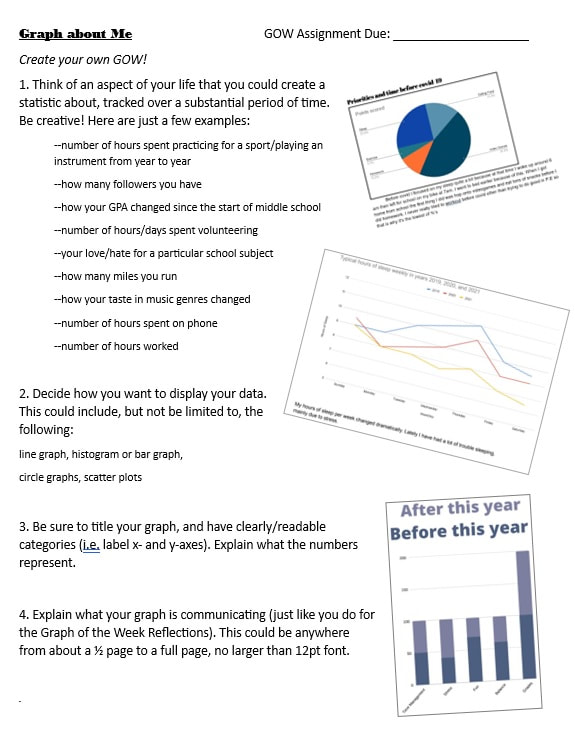
Sources:
trashcansunlimited.com/blog/biggest-landfill-in-the-world/ www.statista.com/chart/27756/global-waste-management-projections/
|
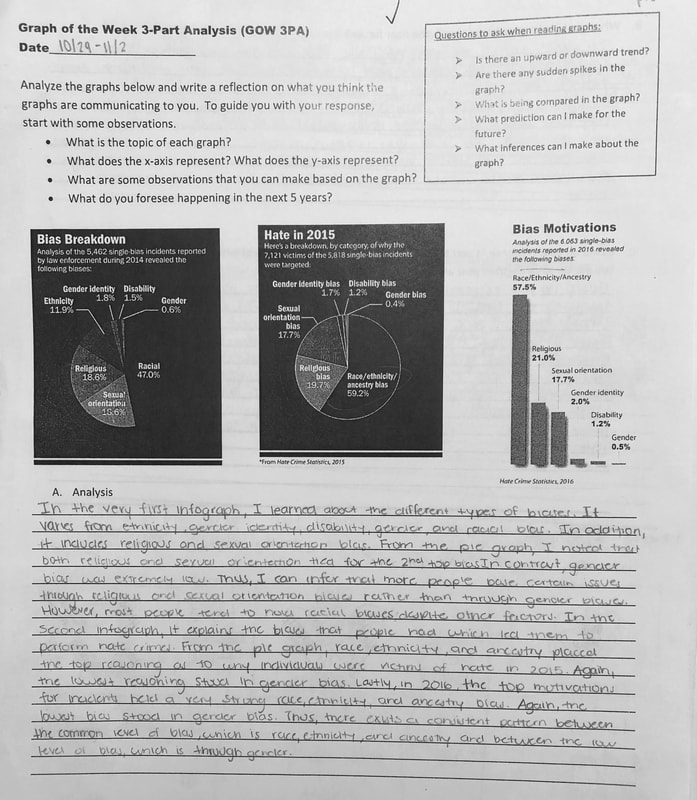
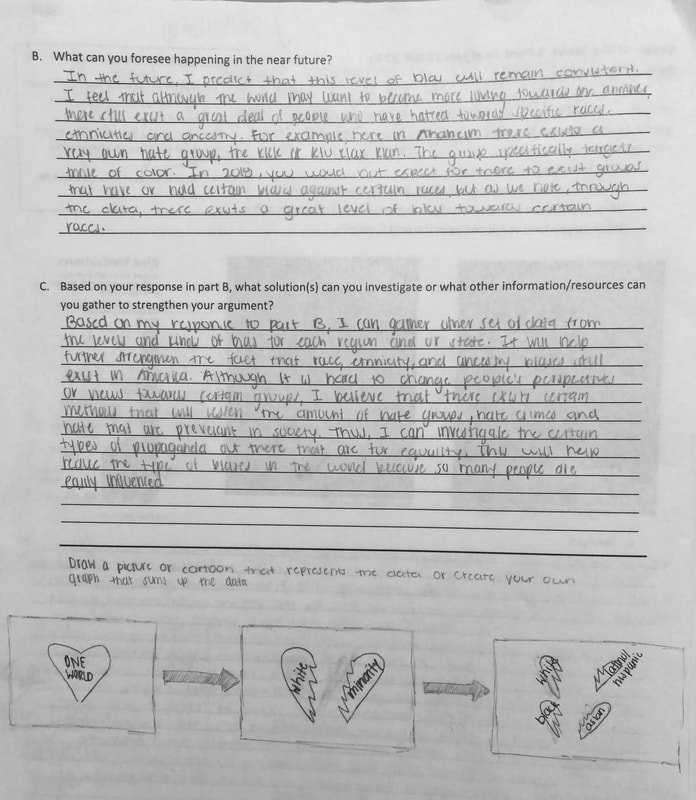
Below are a few student samples for this week's Graph About Me GOW!


How will my students benefit from this weekly assignment?
Students will become sharper, analytical thinkers in today's world.
Students are given the opportunity to communicate their critical thinking and analysis through writing and classroom discussion. Common Core Math Standards MP1-MP4:
NGSS Science Standards K-12 Science and Engineering:
|
|
|
|
What others have said about Turner's Graph of the Week...
https://mathprojects.com/2013/09/01/graph-of-the-week-new-site/
https://www.doe.in.gov/covid-19/turners-graph-week
https://sites.google.com/site/btrgrad/curriculum-planning/content-specific/mathematics/go-to-websites/graph-of-the-week
https://ideagalaxyteacher.com/graph-of-the-week/
http://piedmontpd.weebly.com/news-and-thoughts/turners-graph-of-the-week
https://www.facebook.com/485026478178427/posts/graph-of-the-week-new-site/701612696519803/
https://www.next.cc/journey/tools/graphs
https://www.middleweb.com/42878/remote-teaching-with-engaging-infographics/
https://universe.parlayideas.com/collections/02e62c78-a41c-4dee-b366-ccb9e98b0b22
Want more GOWs? Visit the GOW Archive for over 200 downloadable PDFs!
The Student
|
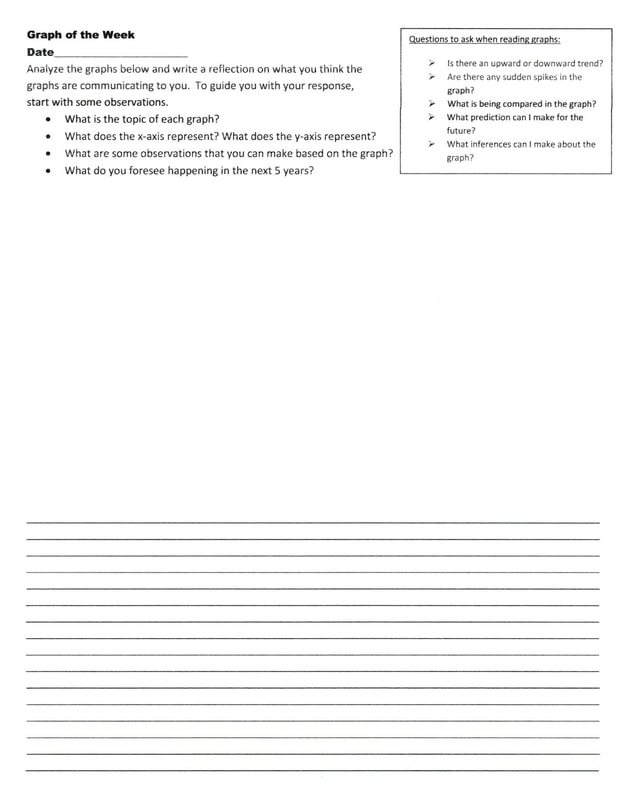
The New GOW: A 3-Part Analysis
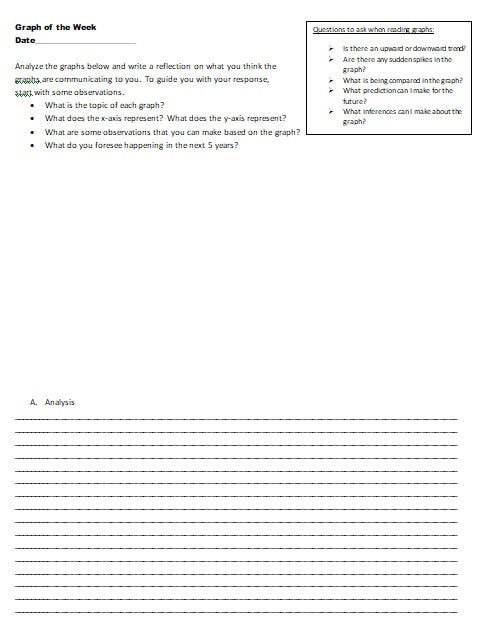
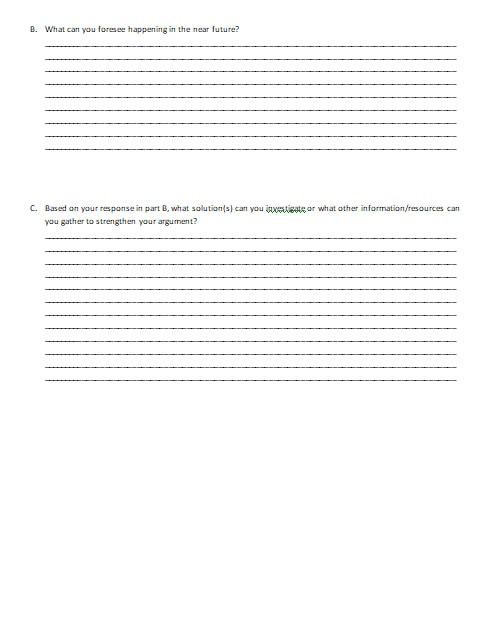
For those of you who would like your students to engage in a deeper analysis of the GOW, this new format (2-sided) might be worth a try: Part A: Analysis (same as what GOW is now) Part B: What can you foresee happening in the near future? Part C: Based on your response in Part B, what solution(s) can you investigate or what other information/resources can you gather to strengthen your argument? I have found in recent years that some of my students want to share alternate perspectives to the information the graph portrays. They give historical context, present a counterargument by citing another source, or want to justify their stance based on personal experience or prior knowledge. I purposely left a bit of space after part C in case you may want students to make your own part D: you can have them create another graphical representation of their own, or make an illustration or cartoon, etc. So this year, I'm trying out this new 3-part written analysis that will give my students a platform in which they can share a bit more. I can't wait to see what they come up with! Click on the image below.
|